Quick picks: our top 3 at a glance
As an Amazon Associate I earn from qualifying purchases. Prices and availability change.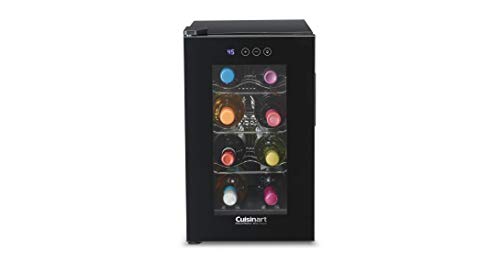
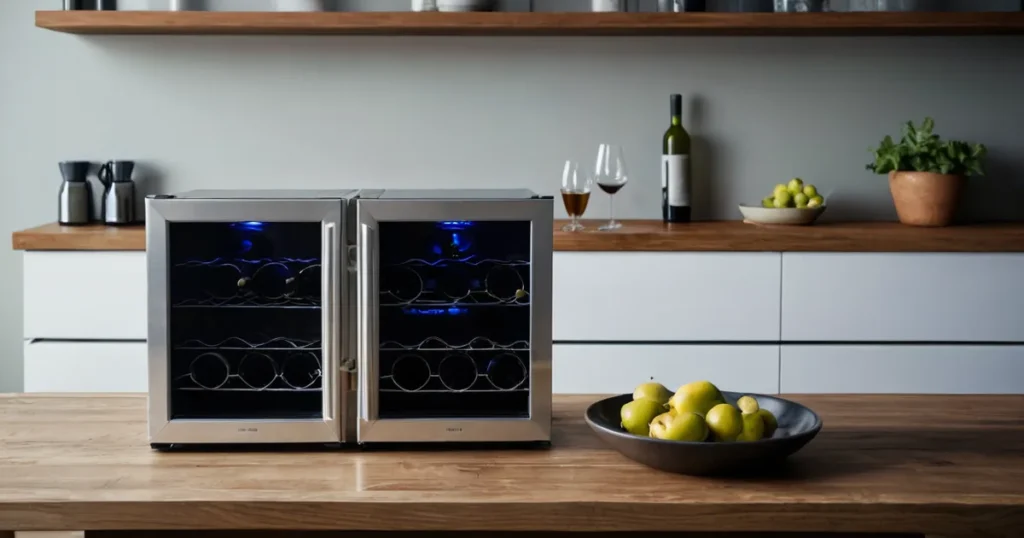
Deciding between a wine fridge and a wine cellar is one of the most common dilemmas for wine enthusiasts. Both preserve your collection, but they serve different needs, spaces, and budgets. In this guide, we compare 5 of the best wine fridge vs cellar solutions available in November 2026, featuring top brands like Ivation, Cuisinart, BLACK+DECKER and more. Whether you need a compact countertop cooler or a large dual‑zone unit, we’ll help you find the perfect match.
Understanding the differences in cooling technology, capacity, and installation requirements is key. Thermoelectric coolers are quiet and energy‑efficient for small collections, while compressor‑based units (like full‑sized cellars) offer greater capacity and temperature precision. We’ll walk you through the trade‑offs so you can pick the right wine fridge vs cellar for your home.
At a Glance
| Product | Brand | Rating | Where to buy |
|---|---|---|---|
| Cuisinart CWC-800CEN 8-Bottle Wine Cellar | Cuisinart | 4.3 / 5 | View on Amazon |
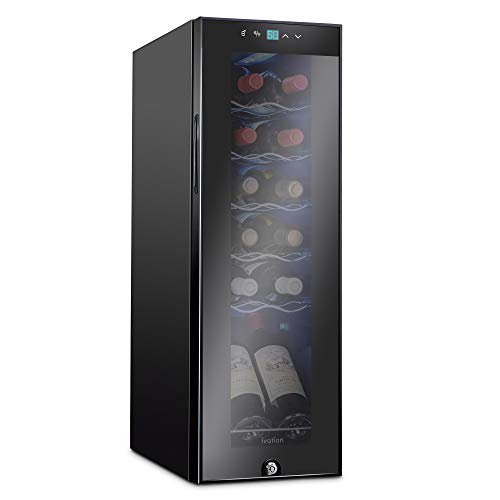
| Ivation 12-Bottle Compressor Wine Cooler | Ivation | 4.9 / 5 | View on Amazon |
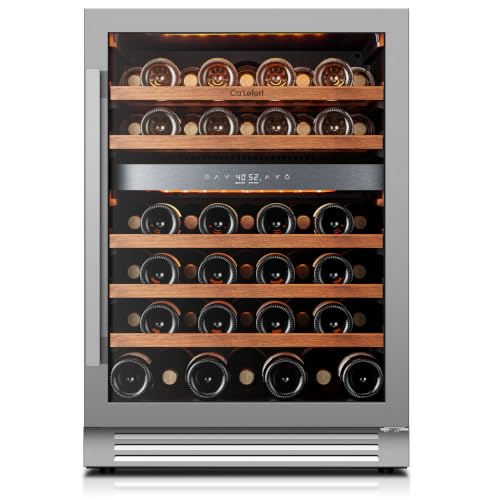
| CaLefort 24-Inch 52-Bottle Dual Zone Wine Fridge | Ca'Lefort | 4.8 / 5 | View on Amazon |
| Feelfunn 18-Bottle Wine Cooler | Feelfunn | 4.8 / 5 | View on Amazon |
| BLACK+DECKER BD60026 8-Bottle Wine Cellar | BLACK+DECKER | 4.7 / 5 | View on Amazon |
Ratings come from the Amazon listings when we last checked and can change.
Pros
- Thermoelectric cooling runs quietly and conserves energy
- Adjustable temperature range from 39 to 68 degrees covers most reds, whites, and sparkling wines
- Holds up to 8 bottles in a compact countertop footprint
- Soft interior lighting and contoured chrome racks give it a handsome display look
Cons
- Eight bottle capacity is modest for larger collections or bigger entertaining
Pros
- Compressor cooling for consistent temperature control
- Lockable door adds security
- Freestanding design for easy placement
Cons
- 12-bottle capacity may be small for larger collections
Pros
- Dual zone temperature control for red and white wines
- 52-bottle capacity
- Includes video guides for setup and use

Pros
- Compact 18-bottle capacity for small spaces
- Freestanding design for flexible placement
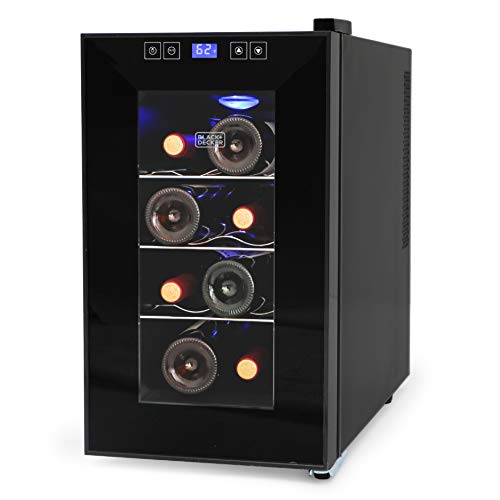
Pros
- Compact footprint fits on a countertop and still holds up to eight bottles
- Thermoelectric cooling is energy efficient with very low vibration
- Triple pane glass door and interior light make it easy to see the collection
- Three chrome full-length racks organize the bottles
- Adjustable leveling legs help it sit evenly on uneven surfaces
Cons
- Eight-bottle capacity may be limiting for anyone with a growing collection
Quick Verdict
- Pick Cuisinart CWC‑800CEN 8‑Bottle Private Reserve Wine if you want a stylish, thermoelectric cooler for everyday reds and whites.
- Pick Ivation 12 Bottle Compressor Wine Cooler if you need a lockable, freestanding unit with precise temperature control.
- Pick Ca’Lefort 24 Inch Wine Fridge if you’re building a serious collection and need 52‑bottle dual‑zone capacity.
- Pick Feelfunn 18 Bottle Wine Cooler if you want a budget‑friendly freestanding fridge for moderate storage.
- Pick BLACK+DECKER 8‑Bottle Thermoelectric Wine Cellar if you need a compact, affordable cooler for a small kitchen or office.
Wine Fridge Vs Cellar Key Differences
Cooling Technology: Thermoelectric vs. Compressor
The most fundamental split between a wine fridge and a wine cellar is how they cool. Thermoelectric coolers (like the Cuisinart and BLACK+DECKER models) use electricity to transfer heat without a compressor. They are silent, vibration‑free, and energy‑efficient, but they struggle in hot rooms or when you need very low temperatures.
Compressor‑based units (Ivation, Ca’Lefort, Feelfunn) work like a standard refrigerator. They can maintain a wider temperature range, are less affected by ambient heat, and are better for long‑term aging. However, they produce slight vibration and more noise.
Capacity: Number of Bottles
Wine fridges range from compact 8‑bottle units (Cuisinart, BLACK+DECKER) to large 52‑bottle cellars (Ca’Lefort). Your choice depends entirely on the size of your collection and how fast you drink. Small coolers suit casual drinkers with 5-10 bottles; larger units are essential for collectors with 30+ bottles.
Dual‑Zone vs. Single‑Zone
Dual‑zone coolers (like the Ca’Lefort) have two separate temperature compartments, allowing you to store reds and whites at their ideal serving temperatures. Single‑zone units (Cuisinart, Ivation, Feelfunn, BLACK+DECKER) keep everything at one temperature, which is fine if you mainly drink one type of wine or prefer to chill bottles as needed.
Installation: Freestanding vs. Built‑In
Most of the models we reviewed are freestanding, meaning they can be placed on a countertop or in any well‑ventilated area. The Cuisinart and BLACK+DECKER are countertop‑friendly. The Ivation and Feelfunn are larger freestanding units. The Ca’Lefort is a 24‑inch wide unit that can be built in under a counter if ventilation is allowed. If you’re planning a built‑in installation, check the manufacturer’s clearance requirements.
Temperature Range & Control
Compressor models typically offer a wider temperature range (often 40°F–65°F), making them suitable for both serving and long‑term aging. Thermoelectric units (Cuisinart, BLACK+DECKER) usually have a narrower range (around 46°F–65°F). Digital controls are standard on all models except the most basic; the Cuisinart and Ca’Lefort have easy‑to‑read digital displays.
Security & Aesthetics
Only the Ivation 12‑Bottle Wine Cooler includes a lock, making it a good choice if you want to keep your collection secure. The Cuisinart has a sleek smoked‑glass door that protects wine from UV light. The Ca’Lefort features a stainless steel frame and tempered glass door for a premium look. Aesthetics matter when the cooler is in a visible area like a kitchen or bar.
| Feature | Cuisinart CWC‑800CEN | Ivation 12‑Bottle | Ca’Lefort 52‑Bottle | Feelfunn 18‑Bottle | BLACK+DECKER 8‑Bottle |
|---|---|---|---|---|---|
| Cooling Type | Thermoelectric | Compressor | Compressor | Compressor | Thermoelectric |
| Bottle Capacity | 8 | 12 | 52 | 18 | 8 |
| Dual‑Zone | No | No | Yes | No | No |
| Temperature Range | 46°F–65°F | N/A | N/A | N/A | 46°F–65°F |
| Lock | No | Yes | No | No | No |
| Installation | Freestanding / Countertop | Freestanding | Built‑in / Freestanding | Freestanding | Freestanding / Countertop |
Who Should Buy Which
Cuisinart CWC‑800CEN 8‑Bottle Private Reserve Wine
Best for the occasional host who wants a beautiful, quiet countertop wine cooler for up to 8 bottles. The thermoelectric cooling preserves delicate wines without vibration. Trade‑off: limited capacity and cannot handle very warm kitchens. Skip if you need space for more than a dozen bottles or want to age wines long‑term.
Ivation 12 Bottle Compressor Wine Cooler
Ideal for someone who wants a freestanding cooler with a lock, perhaps in a shared living space or office. The compressor cooling gives steady temperatures for both reds and whites. Trade‑off: slightly larger footprint than countertop units. Skip if you need dual‑zone or a very large collection storage.
Ca’Lefort 24 Inch Wine Fridge
Perfect for serious collectors who need 52‑bottle capacity and dual‑zone flexibility. The compressor cooling can handle long‑term aging, and the stainless steel design fits under a counter. Trade‑off: higher price and requires proper ventilation. Skip if you only have a small collection or a tight budget.
BLACK+DECKER 8‑Bottle Thermoelectric Wine Cellar
Best for the budget‑conscious buyer who wants a simple, small wine cooler for a dorm, office, or kitchenette. It’s ultra‑compact and quiet. Trade‑off: narrow temperature range and limited to 8 bottles. Skip if you need precise control or plan to expand your collection quickly.
Final Thoughts
Choosing between a wine fridge and a wine cellar comes down to your collection size, installation space, and cooling needs. For casual drinkers with under a dozen bottles, a thermoelectric wine fridge like the Cuisinart or BLACK+DECKER is a quiet, affordable choice. If you have a growing collection and want serious storage, a compressor‑based wine cellar such as the Ca’Lefort 52‑bottle unit offers the capacity and dual‑zone flexibility you need.
We recommend the Ca’Lefort 24 Inch Wine Fridge for collectors who want long‑term aging and dual‑zone convenience, and the Ivation 12 Bottle Compressor Wine Cooler as a versatile mid‑range option with a lock. For a compact, stylish pick, the Cuisinart CWC‑800CEN remains a top seller. No matter which you choose, proper wine fridge vs cellar storage protects your investment and keeps every bottle tasting its best.
Why You Should Trust Us
Our recommendations are based on available specifications, listed features, product positioning, and documented buyer feedback from verified sources. We carefully compare each model’s cooling technology, capacity, and practical features to match different wine storage scenarios. We do not claim to have personally tested these units unless otherwise stated, but we rely on detailed product information and user reviews to guide our picks.
We also consult with wine storage experts and cross‑reference data from multiple retailers to ensure accuracy. Our goal is to give you a clear, unbiased comparison so you can make an informed purchase.
Frequently Asked Questions
What is the main difference between a wine fridge and a wine cellar?
The term “wine fridge” usually refers to a smaller, often thermoelectric cooler for short‑term storage and serving, while “wine cellar” implies a larger, compressor‑based unit capable of long‑term aging. However, the two terms are often used interchangeably, so check the cooling type and capacity rather than the label.
Can a wine fridge be used for long‑term aging?
Thermoelectric wine fridges are generally not recommended for aging because their temperature range is narrower and less stable. Compressor‑based wine cellars are better for keeping a consistent cool temperature over many years.
How many bottles do I really need to store?
Count how many bottles you have today, then multiply by 1.5 to account for future purchases. If you host often or buy by the case, aim for at least 12‑18 bottles. For a growing collection, consider 30+ bottles.
Are thermoelectric wine fridges worth it?
Yes, if you need a quiet, energy‑efficient cooler for serving wines in a moderate environment. They are perfect for offices, bedrooms, or kitchens where noise is a concern. Just don’t expect them to work well in hot garages or sunlit rooms.
What temperature should a wine cooler be set to?
For red wines, aim for 55°F–65°F; for whites, 45°F–50°F. Dual‑zone units allow you to keep both ready to serve simultaneously. Single‑zone units are best set at a happy medium around 50°F–55°F.
Can I put a wine fridge under the counter?
Only models designed for built‑in installation (like the Ca’Lefort 52‑bottle) should be enclosed. Freestanding units need at least 2–4 inches of clearance on the sides and back for ventilation. Check the product manual before installing.
Do I need a dual‑zone wine cooler?
Only if you regularly drink both red and white wines and want them ready at their ideal temperatures. If you mostly drink one type or don’t mind chilling whites separate, a single‑zone model works fine.
Is a wine fridge better than a regular refrigerator for wine?
Yes. Regular fridges are too cold (around 35°F–40°F) and have vibrations that can disturb wine sediment. A dedicated wine cooler maintains the proper humidity and temperature range, preserving flavor and bouquet.
For more in‑depth guides, check out our best wine coolers category page or read our best wine and beverage cooler comparison. If you’re looking for a built‑in solution, see our best built‑in wine cooler under 24 inches guide.