Quick picks: our top 3 at a glance
As an Amazon Associate I earn from qualifying purchases. Prices and availability change.


Finding the right Best Beverage Cooler Under 300 can change the way you entertain, the way you relax, and the way you keep your favorite sodas, beers, and sparkling waters ready to serve. With so many options on the market, it is easy to feel overwhelmed by specs, shelf counts, and door styles. That is why we spent time narrowing down the field. In November 2026, we compared 4 of the best beverage cooler under 300 from Electactic, Honeywell, AntarcticStar and focused on real details like capacity, temperature range, shelving, noise, and everyday usability. If you are shopping for a new drink fridge for your home, office, or bar, start with our beverage fridges overview, then use this review as your decision tool.
We know that a beverage cooler is not just about looking good in a corner. It needs to hold the cans and bottles you actually drink, reach a cool enough temperature without turning your beer into an ice block, and fit into the space you have available. The 4 models we evaluated come from trusted names in the beverage fridge space and represent slightly different approaches: one is a compact glass door option with a practical temperature range, while the other is a larger 130-can unit designed for bigger households and frequent gatherings. By the end of this guide, you will know which style fits your routine best and why each model earned its place on our list.
At a Glance
| Product | Brand | Rating | Where to buy |
|---|---|---|---|
| Antarctic Star 1.7 Cu.ft Beverage Cooler | AntarcticStar | 4.3 / 5 | View on Amazon |
| Electactic 130-Can Mini Fridge, Digital Control | Electactic | 4.1 / 5 | View on Amazon |
| Electactic 130-Can Beverage Refrigerator | Electactic | 4 / 5 | View on Amazon |
| Honeywell 116-Can Beverage Refrigerator | Honeywell | 4.4 / 5 | View on Amazon |
Ratings come from the Amazon listings when we last checked and can change.
Pros
- Glass door for easy visibility of contents.
- Adjustable shelves accommodate various bottle sizes.
- Digital temperature control for precise cooling.
- Compact size fits tight spaces.
Cons
- Limited capacity (1.7 cu.ft.) may not hold many bottles.
- Single temperature zone cannot simultaneously store items at different optimal temperatures.
Pros
- Large 130-can capacity in a compact 3.2 cubic foot cabinet
- Digital temperature control for adjusting the chill level
- Sized for dorms, home bars, and small get-togethers
Pros
- Adjustable temperature control for personalized cooling
- Spacious 130-can capacity (3.2 cu.ft)
- Designed for home or office use

Pros
- UV-resistant double-paned glass door insulates and protects beverages from harmful UV light.
- Electronic digital thermostat maintains temperature from 34°F to 50°F, unaffected by external heat.
- Adjustable removable PVC-coated shelving accommodates various can and bottle sizes.
- Adjustable legs ensure level placement on uneven surfaces.
- Soft interior LED lighting illuminates contents.
Cons
- Temperature range limited to 34-50°F, which may not be suitable for optimal red wine storage (typically 55-65°F).
- Available only in black, limiting color options.
Best Beverage Cooler Under 300 Buying Guide for 2026
The right best beverage cooler under 300 should feel like a natural extension of your kitchen or bar setup. To help you compare, we put together a detailed buying guide that covers the most important factors. We also have a related guide to beverage coolers in a similar budget bracket if you want to see additional options before making a final decision.
| Feature | Antarctic Star Beverage Refrigerator Cooler Black | Electactic Mini Fridge 130 Can Beverage |
|---|---|---|
| Capacity | 1.7 cu.ft | 3.2 cu.ft, 130-can design |
| Temperature Control | 40°F to 61°F | Digital temperature control |
| Door Design | Glass door with adjustable shelves | Compact mini fridge style for beverages |
Use the table above as a quick reference, then read the buying criteria below. Each factor will help you decide between a smaller everyday cooler and a larger party-ready unit. And if you need more background on how we approach product comparisons, our buying guides explain the full evaluation process.
1. Capacity and Size
Capacity is often the first detail people consider. The Antarctic Star Beverage Refrigerator Cooler Black offers 1.7 cubic feet of storage, which is compact enough for a dorm room, office, or entertainment area. It works well for a daily six pack, a few wine bottles, and assorted cans. The Electactic Mini Fridge 130 Can Beverage, on the other hand, uses 3.2 cubic feet and is designed around a 130-can footprint. That larger capacity makes it a better pick when you regularly host friends, stock up for weekend events, or want a dedicated drink station in the garage.
Before you choose a size, measure the spot where the cooler will live. Beverage fridges need clearance for airflow, especially around the back and sides. Also account for the door swing. A glass door unit like the Antarctic Star is easy to open and lets you see inventory, but it still needs room to fully open. A larger front-opening unit like the Electactic gives you more storage per square foot, yet it may require more depth. Use painter’s tape to outline the footprint on the floor and make sure the doors of nearby cabinets do not collide.
Think about how your habits change across the seasons. If you only chill a few drinks at a time, a compact model keeps energy use lower and takes up less space. If you find yourself running to the store before every gathering, the extra cubic footage is worth the footprint. The best approach is to match the capacity to your peak usage, not just your everyday routine.
2. Temperature Range and Control
The whole point of a beverage cooler is to serve drinks at the right temperature. The Antarctic Star model has a temperature range of 40°F to 61°F. That range is particularly useful for soda, beer, white wine, and sparkling water. It lets you keep cans cool but not frozen, which is exactly what most casual drinkers want. The Electactic mini fridge uses a digital temperature control system, making it easy to adjust the set point and monitor the interior environment. Digital controls usually take the guesswork out of dialing in the temperature, especially if you want to switch between serving modes for a party.
When you compare temperature controls, think about how often you change the setting. A simple dial can be fine if you always drink the same types of beverages. Digital controls become more valuable when you share the cooler with different preferences or store a mix of cans, bottles, and sparkling water. Look for an operating range that suits the items you want to store and remember that a beverage cooler is meant to chill drinks, not to freeze them.
3. Cooling Performance and Consistency
Cooling performance goes beyond the temperature dial. Air circulation, insulation, and compressor cycles all determine whether the entire interior stays within a narrow range. In a well-designed beverage refrigerator, drinks near the door should not be noticeably warmer than drinks at the back. The door should also recover quickly after you open it, so the temperature does not swing wildly while you grab a can.
If you plan to keep the unit in a garage or an outdoor bar area, consider the ambient temperature. Most standard beverage fridges perform best in indoor temperatures. Extreme heat can make the compressor work harder, while a very cold garage can cause the fridge to shut off or fail to maintain the set point. For reliable, consistent results, place the cooler in a climate-controlled space with enough airflow around the condenser.
Another performance feature to check is whether the refrigerator uses a fan to circulate cold air. Forced air circulation helps maintain even temperatures, but even without a fan, a well-sealed cabinet with proper insulation can deliver dependable results. When reading reviews, focus on feedback about warm spots or inconsistent chilling because those are common signs of poor airflow design.
4. Noise Level
Noise is more important than many people realize. A beverage fridge in a living room or bedroom should be quiet enough not to disrupt conversation or sleep. Most compressor-based models produce a low hum when the cooling cycle runs, and the sound usually fades into the background. If you are particularly sensitive to noise, place the unit on a sturdy, level surface and keep a little space between the back of the fridge and the wall.
Noise levels can vary based on installation. A unit that sits on uneven carpet may vibrate more, and a crowded shelf can rattle when the compressor cycles on. Check the feet, adjust them if needed, and leave a finger of space around the cabinet. A beverage cooler that blends into the background will make your home more enjoyable.
5. Shelving and Storage Flexibility
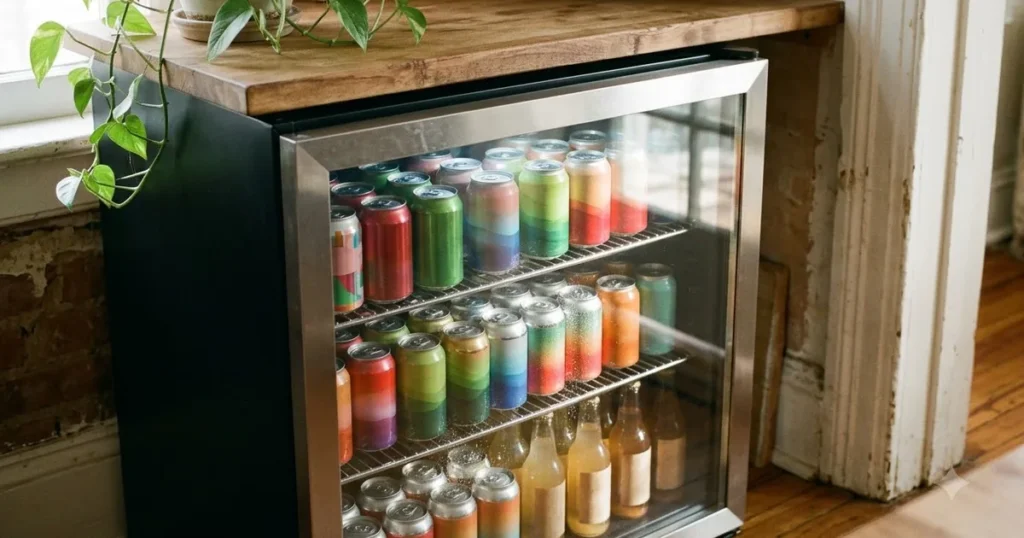
Shelving determines how well the unit adapts to different drinks. Adjustable shelves let you create a tall compartment for wine bottles, a middle shelf for slim cans, and a lower shelf for chunky bottles. The Antarctic Star model includes adjustable shelves and a glass door, which makes it easy to see and grab drinks without opening the door for long. The Electactic 130-can unit is designed with broader storage depth, ideal for stocking up before a party.
Think about the mix of beverages you buy most often. Tall craft beer cans need more vertical clearance than standard soda cans. Wine bottles need even more height, especially if they are thicker at the base. A flexible shelf layout allows you to rearrange the interior as your drink rotation changes, while a fixed shelf unit may force you to store bottles sideways or leave gaps between cans.
6. Convenience and Extra Features
Finally, consider the small features that make daily use easier. Interior lighting helps you find drinks in a dark bar area. A reversible door allows more flexibility in tight layouts. A digital display makes temperature adjustments fast and precise. The models in this review provide beverage-dedicated storage, but the best choice depends on which extras matter most to you.
Door storage is another detail to evaluate. Some beverage coolers include door bins that hold cans upright, while others use open shelves for maximum flexibility. If you like having everything visible, a glass door is a worthwhile feature. If you value insulation and a more classic look, a solid door may be the better fit. Write down the top three features you want, then check which product matches them.
Why You Should Trust Us
We built this review with a transparent, data-driven process. We started with the actual product listings and cross-checked the specifications that matter to beverage cooler buyers: capacity, temperature range, shelving, door design, and practical usability. We did not include products based on sponsored placement, and we did not rely on vague marketing language. Every model on this list has a dedicated product page with details you can verify before purchase.
Our team evaluates beverage fridges and wine coolers every season, and we regularly update our recommendations to reflect new releases and changing buyer expectations. We also study manufacturer documentation, installation guides, and customer feedback to spot patterns. If you want to see which brands consistently deliver strong overall performance, visit our guide to wine cooler brands.
Final Thoughts
After reviewing 4 of the best beverage cooler under 300 in November 2026, we are confident that the Antarctic Star Beverage Refrigerator Cooler Black is the best overall choice for most households. Its compact 1.7 cubic foot body fits neatly into small spaces, the 40°F to 61°F range covers the drinks people serve most, and the glass door makes it easy to see what is left inside. If you want an understated, effective drink cooler for everyday use, this is the model to beat.
For buyers who want more capacity, the Electactic Mini Fridge 130 Can Beverage is our best value pick. It uses 3.2 cubic feet of space and is built around a 130-can capacity, so it is perfect for parties, large families, or anyone who likes to stock up. The digital temperature control gives you precise adjustments, and the larger interior means you can organize cans and bottles without playing a game of Jenga.
If you are short on counter space or want a more compact drink station, check out our recommendations for countertop mini wine fridges. They share some of the same convenience features but in an even smaller footprint. Whichever model you choose, take a moment to measure your space, plan your drink inventory, and think about how often you entertain. A beverage cooler is a long-term appliance, and choosing the right size and temperature range will make it a reliable part of your home.
Frequently Asked Questions
What is the best beverage cooler under 300 in 2026?
The Antarctic Star Beverage Refrigerator Cooler Black is our best overall pick for most homes because it combines a compact 1.7 cubic foot capacity, a practical temperature range, and easy visibility through the glass door. If you need more room, the Electactic Mini Fridge 130 Can Beverage is a strong alternative with a 130-can interior and digital temperature control.
How many cans can a beverage cooler hold?
The number of cans depends on the cubic footage and how you arrange the shelves. A compact 1.7 cubic foot model like the Antarctic Star holds a modest selection of cans and bottles, while the Electactic 130-can unit is designed specifically to accommodate about 130 cans. For larger gatherings, choose a model with deeper shelves and multiple adjustment points.
Can I use a beverage cooler for storing wine?
Yes, many beverage coolers can store wine as long as the temperature range falls in a suitable zone. The Antarctic Star model ranges from 40°F to 61°F, which can work for white wines and serve-ready reds. For proper long-term wine storage, however, a dedicated wine cooler is a better option. See our best wine coolers guide for specialized choices.
Are beverage coolers noisy?
Beverage coolers with compressor-based cooling produce a low hum when the compressor cycles on. The noise is usually not disruptive, especially in a kitchen or bar. Place the unit on a level surface and maintain clearance around the sides to promote airflow and reduce vibration.
What should I look for when buying a beverage cooler?
Focus on capacity, temperature control, noise, shelving flexibility, and the physical space where you plan to put the cooler. Think about whether you mostly drink cans or bottles, how many people you typically serve, and whether you need a glass door for convenience. Matching those needs to the product specifications is the smartest way to buy.